They See Us Mac OS
MacBook Pro — our most powerful notebooks featuring fast processors, incredible graphics, Touch Bar, and a spectacular Retina display. Note: The headings on this list indicate the Macintosh System bundle names; the bullet points indicate the version of the System File included in that bundle. This is to make it clearer for people searching for specific bundle versions as opposed to System File versions. Finder File versions are not indicated. 1 Classic Mac OS 1.1 Macintosh System Software (0 - 0.3) 1.1.1 System File 1 1.1.2. MacOS is the operating system that powers every Mac. It lets you do things you simply can’t do with other computers. That’s because it’s designed specifically for the hardware it runs on — and vice versa. MacOS comes with an entire suite of beautifully designed apps. Editor's note: This is the first of a series of articles covering Mac OS X Server networking topics. AppleTalk is one of the two protocols typically used in today's Mac networks.
Understanding User Accounts in macOS. Posted on November 12th, 2020 by Kirk McElhearn Everyone who uses a Mac has a user account. If you’re the only person using your Mac, then there will only be one account.
After successfully created a macOS bootable USB, the next step is how to use it to install macOS from external USB drive. This is not normal case because macOS is very stable and have less bugs/virus than Windows PC. So many Mac users don't know how to perform a clean install of macOS on their Mac when the device was broken or could not boot into desktop.
Please don't worry. We will share detailed steps on how to install macOS/Mac OS X from an USB drive. Even you had issues during this process, it is not thing to be afriad as we have offered the troubleshooting guide as well.
How to Install macOS on Mac from USB Drive (Normal Way)
If the target Mac computer already had a macOS or OS X on it, then installing macOS from USB is straightforward and this is called the normal way.
Step 1: Insert the macOS bootable USB drive on a USB port of Mac computer.
Step 2: Shut down the Mac and wait for 1-2 minutes. This will make sure the Mac is powered off.
Step 3: Hold the Power and Option key simultaneously for 15 seconds. This will bring up the Startup Manager on Mac.
Step 4: You will see all bootable devices attached to this Mac, including Macintosh HD and external USB or DVD. Click the drive name of your macOS bootable USB to start the installation process.
Step 5: Agree the terms and conditions and wait for the installation process to be done.
How to Install macOS on Mac from USB Drive (Advanced)
If the drive was not partitioned or the partition table was corrupted, then you can not install macOS on Mac with the normal way. You have to boot Mac into Recovery mode and format the hard drive or SSD to Apple file system first.
Step 1: Shut down your Mac and press the Power key to turn on the Mac; then immediately press Command and R keys.
Step 2: You will be directed to the macOS utility section and here you need to select 'Disk Utility' to format the USB drive. From the Disk Utility app, select Mac drive name under Internal section and then click on the 'Erase' button.
Step 3: You will get a couple of options from the Format. Pleasec choose APFS (macOS) or Mac OS Extended (Journaled) for old version Mac OS X.
Step 4: After the completion of the formatting process, go back to the macOS utility section and this time, select 'Reinstall macOS'.
Step 5: Further, go to the Startup Manager, move to the External drive section, and select your bootable macOS USB drive.
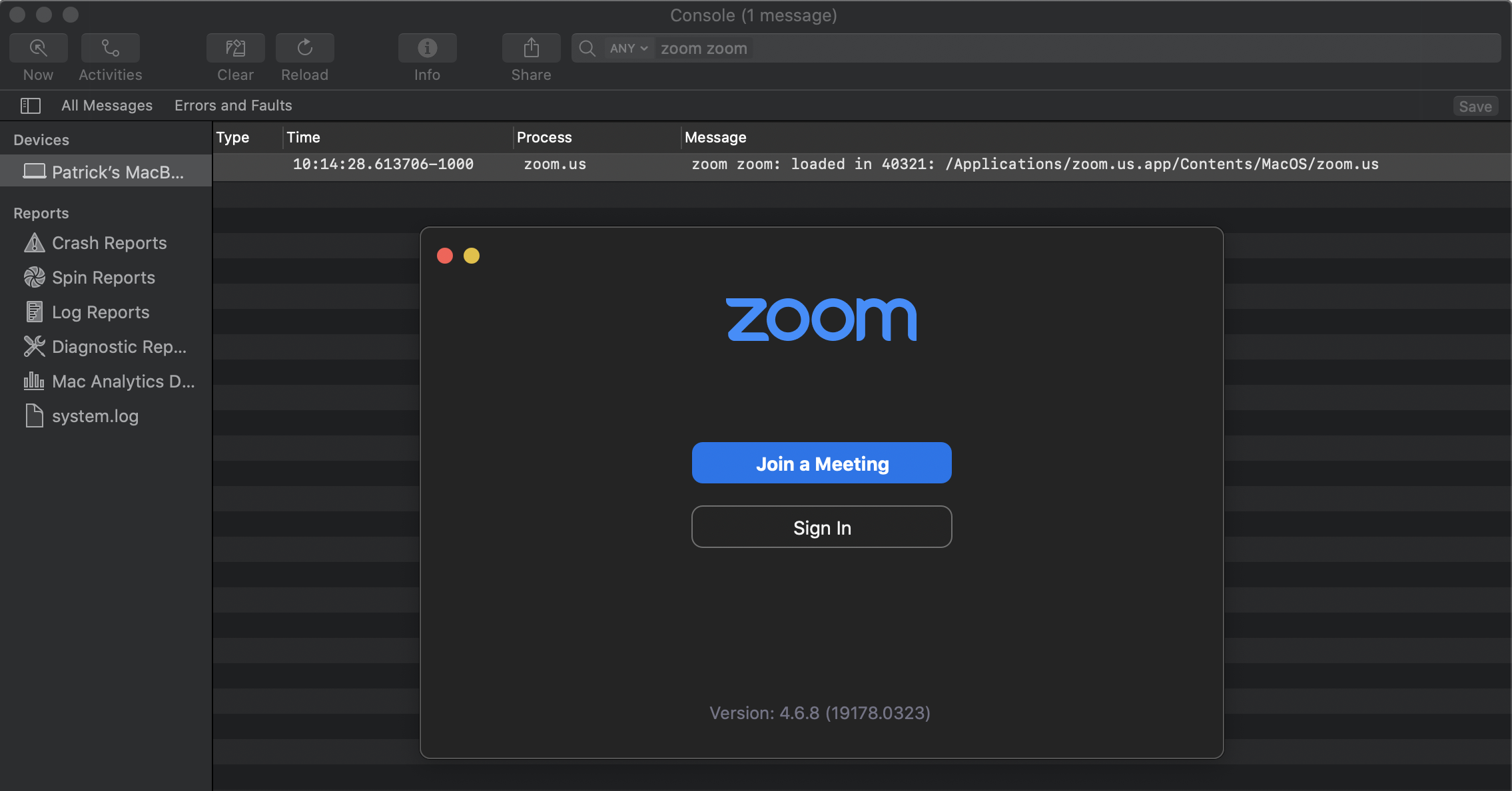
Step 6: Now, the configuration of MacOS will start. As soon as the process starts, it will provide Terms and Agreement page and your job is to agree with the same and then click on the continue button.
Step 7: After that, click on the 'Continue' button to start the installation process. This will take 30-45 minutes and once it gets completed, restart Mac.
Step 8: As you are using the fresh copy of MacOS on Mac machine, so you need to set up the OS and for that connect the Mac with the Wi-Fi and then sign in with the Apple account.
Step 9: After signing in, you can access the several products of Apple such as iCloud, DropBox and many more.
Quick Troubleshooting Tips if You Got Stuck during MacOS Installation
Could not write installation information to disk
They See Us Mac Os X
If you see the message like 'Could Not Write Installation Information to Disk' when you are trying to install the OS, it means, some important files are missing from the bootable USB device. Mostly, this error happens when you download Mac OS file from an unauthorized site.
You can fix this issue just by downloading the original OS file from the Apple store and then create a fresh bootable USB using the same.
Compatibility error
If you are upgrading the OS X after having an older version, you can get the compatibility error message. In such case, just cross-check the system requirement for the OS you want to install on your Mac system.
You can fix this issue just by downloading the original OS file from the Apple store and then create a fresh bootable USB using the same.
macOS could not be installed on your Computer
If you see the error message similar to 'macOS Could Not Be Installed on Your Computer' that means, either your system is not compatible or the Date and Time settings in your system is not up to date..
To resolve the problem, first, check the system combability for the OS X. If it's fine and still you are facing the error, then just update the system Time & Date with the option of 'Local Apple time server'.
Application is damaged, can't be used to install macOS
You the message 'application is damaged, can't be used to install macOS' appear on your screen, it means the OS certificated has been expired. And so, you won't be able to proceed further for installation.
The simple solution is; you need to create a fresh bootable USB by downloading the MacOS file from its official website.
MacOS couldn't install on this computer
Sometimes, the thirty-party tool which you use to create a bootable USB is the culprit. If the OS files will not be copied successfully using the bootable tool, then you may see the message like 'MacOS couldn't install on this computer'.
In this case, you should avoid using a third party bootable tool despite you should create a bootable USB with the help of command.
Conclusion
The above tutorial covers most of the issues you could come across during the installation process. If you had other issues not mentioned in this article, please contact us and our technical team will help you fix it.
This is the new home for experimental binaries and documentation related to R for macOS. To learn more about the R software or download released versions, please visit www.r-project.org.All software on this page is strictly experimental and subject to acceptance of the supplied R license agreement and the disclaimer at the end of the page.
Important note about R 4.0.0Starting with R 4.0.0 alpha we are building R using standard Apple tools (Xcode 12.4) and GNU Fortran 8.2 from fxcoudert and the target is macOS 10.13 (High Sierra). All dependent static libraries are available in the libs-4 directory. Please make sure you remove any modifications to build flags from your home since no custom compilers are used anymore. For more information about alternative OpenMP options (as in older version) see the openmp page of this site.
Apple silicon update: it is now possible to build R for the Apple silicon arm architecture (new Macs with the M1 processor) - see our R developer blog post and the instructions in the R manual. The plan is to have an official native arm release of R 4.1.0, but in the meantime we intend to provide native builds of R-devel here - see 'big-sur' builds for arm64 below and more details in the Apple silicon section. Note that the tools are still highly experimental so the arm build is also experimental and things may change as we go. That said, our current Intel releases work just fine on the new Macs as well using Rosetta 2.
Index
- Will R Work on Apple Silicon?(Information on the status of the port to Apple's new M1 architecture.)
Nightly builds for macOS
R framework
| Build | OS | Date | Status | Download |
|---|---|---|---|---|
| R-3.6-branch 3.6.3 Patched (2020/04/28, r80254) | el-capitan | May 1 21:18 | x86_64: OK (log) Package: OK | R-3.6-branch-el-capitan-sa-x86_64.tar.gz (67Mb) R-3.6-branch-el-capitan.pkg (78Mb, installer incl. GUI) |
| R-4.0-branch 4.0.5 Patched (2021/04/30, r80254) | high-sierra | May 1 20:41 | x86_64: OK (log) Package: OK | x86_64/R-4.0-branch.tar.gz (x86_64, 74Mb) R-4.0-branch.pkg (86Mb, installer incl. GUI) |
| R-4.1-branch 4.1.0 alpha (2021/05/01, r80254) | high-sierra | May 1 20:53 | x86_64: OK (log) Package: OK | x86_64/R-4.1-branch.tar.gz (x86_64, 75Mb) R-4.1-branch.pkg (87Mb, installer incl. GUI) |
| R-devel 4.2.0 Under development (unstable) (2021/05/01, r80254) | high-sierra | May 1 21:04 | x86_64: OK (log) Package: OK | x86_64/R-devel.tar.gz (x86_64, 75Mb) R-devel.pkg (87Mb, installer incl. GUI) |
| R-4.1-branch 4.1.0 alpha (2021/04/26, r80229) | big-sur | Apr 26 22:37 | arm64: OK (log) Package: OK | arm64/R-4.1-branch.tar.gz (arm64, 75Mb) R-4.1-branch.pkg (77Mb, installer incl. GUI) |
| R-devel 4.2.0 Under development (unstable) (2021/04/26, r80229) | big-sur | Apr 26 22:45 | arm64: OK (log) Package: OK | arm64/R-devel.tar.gz (arm64, 75Mb) R-devel.pkg (78Mb, installer incl. GUI) |
Important: The big-sur builds are compatible with the M1 arm-based Macs only. Intel Macs are supported by the high-sierra build which works on any macOS >=10.13 including Big Sur.
The installer image (*.pkg) is packaged exactly the same way as the CRAN release of R (including the GUI) and it will update your R version (unless you use pkgutil - see instructions during installation and/or the 'Multiple versions'section of the R Installation and Administration manual).
Alternatively, you can use the tar-ball (*.tar.gz) in the table above. The tar-ball must be unpacked in the root directory using:
$ tar fvxz R*.tar.gz -C /
NOTE: The tar-ball does not contain the GUI (see below for a separate download).
NOTE: The installer includes Tcl/Tk package which will install in /usr/local. It is optional (only needed for the tcltk R package) and can be unchecked at installation time.
If you see any issues with the builds, please contact Simon Urbanek (the macOS maintainer of R) or report on the R-SIG-Mac mailing list.
Mac OS X GUI
| Version | Build | Download |
|---|---|---|
| Mac OS X GUI rev. 7964 for R 3.6.x | el-capitan-Debug.dmg | R-GUI-7964-3.6-el-capitan-Debug.dmg |
| Mac OS X GUI rev. 7964 for R 3.6.x | el-capitan-Release.dmg | R-GUI-7964-3.6-el-capitan-Release.dmg |
| Mac OS X GUI rev. 7964 for R 4.0.x | high-sierra-Debug.dmg | R-GUI-7964-4.0-high-sierra-Debug.dmg |
| Mac OS X GUI rev. 7964 for R 4.0.x | high-sierra-Release.dmg | R-GUI-7964-4.0-high-sierra-Release.dmg |
| Mac OS X GUI rev. 7964 for R 4.1.x | high-sierra-Debug.dmg | R-GUI-7964-4.1-high-sierra-Debug.dmg |
| Mac OS X GUI rev. 7964 for R 4.1.x | high-sierra-Release.dmg | R-GUI-7964-4.1-high-sierra-Release.dmg |
| Mac OS X GUI rev. 7964 for R 4.2.x | high-sierra-Debug.dmg | R-GUI-7964-4.2-high-sierra-Debug.dmg |
| Mac OS X GUI rev. 7964 for R 4.2.x | high-sierra-Release.dmg | R-GUI-7964-4.2-high-sierra-Release.dmg |
| Mac OS X GUI rev. 7963 for R 4.1.x | big-sur-Debug.dmg | R-GUI-7963-4.1-big-sur-Debug.dmg |
| Mac OS X GUI rev. 7963 for R 4.1.x | big-sur-Release.dmg | R-GUI-7963-4.1-big-sur-Release.dmg |
| Mac OS X GUI rev. 7963 for R 4.2.x | big-sur-Debug.dmg | R-GUI-7963-4.2-big-sur-Debug.dmg |
| Mac OS X GUI rev. 7963 for R 4.2.x | big-sur-Release.dmg | R-GUI-7963-4.2-big-sur-Release.dmg |
To install, open the image and drag the R icon to your Applications folder. Alternatively the GUI can be run directly off that image without copying if you just want to test it. Build configurations with '64' suffix are 64-bit builds, all others are 32-bit (except for Debug). If you want to use both, rename one of them or place them in different directories.
Tools
In order to compile R and R packages you will need Xcode Developer ToolsThey See Us Mac Os Catalina
and a Fortran compiler. For details and download, please read the Tools page. The R 4.0.0 and higer binaries are built using Xcode 11.4.CRAN macOS master
This is now the master repository for released R package binaries. If you have issues with other mirrors, try using https://mac.r-project.org/ as your mirror as it is updated first.Apple silicon (aka arm64, aarch64, M1)
To avoid clashes with the Intel builds, we use separate tools and libraries for theThey See Us Mac Os Download
arm64 builds of R on macOS. This is only relevant if you want to compile R packages yourself. All tools and libraries live in /opt/R/arm64 including the GNU Fortram compiler and you can download them from libs-arm64. It is assumed thatThey See Us Mac Os 11
/usr/local is unsafe as it may contain Intel binaries which don't mix, therefore R will not try to use /usr/local unless a manual flags override is issued. However, it also means that it is safe to use our arm binaries without affecting your legacy Intel ecosystem.The big-sur arm64 build of R requires XQuartz 2.8.0_rc1 or higher to use the X11 components.
Legacy R
The current build supports only macOS X 10.13 (High Sierra) or higher. Older versions of macOS are not supported in binary form, but R can be compiled from sources for such legacy OS versions. Last released version for Mac OS X 10.4 (Tiger) was R 2.10.1, last release for Mac OS X 10.5 (Leopard) was R 2.15.3, last release for Mac OS X 10.11 (El Capitan) was R 3.6.3.Other binaries
The following binaries are not maintained or supported by R-core and are provided without any guarantee and for convenience only (Mac OS X 10.4.4 or higher required). They match the binaries used on the CRAN binary build machine and thus are recommended for use with CRAN R package binaries.
- GTK+ 2.24.17 framework - 64-bit build of GTK+ 2.24.17, necessary for binary R packages that use GTK+ version 2 (such as RGtk2+). R 3.0.0 and higher, Snow Leopard build
Download: GTK_2.24.17-X11.pkg (ca. 41MB) - GTK+ 2.18.5 framework - universal build of GTK+ 2.18.5, necessary for binary R packages that use GTK+ version 2 (such as RGtk2+). R 2.10.0 - 2.15.3, Leopard build
Download: GTK_2.18.5-X11.pkg (ca. 58MB) - RSwitch - a small GUI that allows you to switch between R versions quickly (if you have multiple versions of R framework installed).
Download: RSwitch-1.2.dmg (ca 67kB, universal, updated 2011/03/24 to support R 2.13.0 and up)
Sources: RSwitch-1.2.tar.gz (Xcode project and sources)NOTE: Bob Rudis is maintaining a new version of a tool which has RSwitch functionality and more - see 3rd party RSwitch replacement (NOT related to R-Foundation or CRAN!).
More external libraries for R 4.0.0 and higher can be found in the /libs-4/ directory. For older versions see the /libs/ directory.