No Short Cut Mac OS
There are hundreds of keyboard shortcuts for Mac users. There are Mission Control shortcuts, Finder shortcuts, system shortcuts, application shortcuts and more. Many you can find by just looking through the menu bar for that application. You can find system ones by looking in the System Preferences under Keyboard.
No Shortcut Mac Os Sierra
But some keyboard shortcuts are more useful than others. And some are harder to remember than others.
So MacMost has compiled a list of our top “power user” keyboard shortcuts for macOS 11.0 (Big Sur). Here they all are on a single PDF page, downloadable and printable: The MacMost MacOS Big Sur Power User Keyboard Shortcuts. Download it and pass it along!
These key combinations apply only to Mac computers with an Intel processor, not Mac computers with Apple silicon.
One of the biggest pet peeves for users who switch to Mac from Windows is the Delete key, because it feels backwards. To make matters worse, the vast majority of Mac users don't use the full-size. Aug 19, 2020 Luckily, there is an option in all recent versions of the macOS operating system to swap Control and Command keys, allowing users to use many Windows OS keyboard shortcuts in Mac as well. After swapping Control and Command keys, you’ll be able to use Ctrl+C, Ctrl+V, Ctrl+T, Ctrl+S and many other keyboard shortcuts. Learn Mac AutoCAD hotkeys and commands with the AutoCAD for MAC Shortcut Keyboard guide to help you work faster and be more efficient while using AutoCAD software.
Finally enter a shortcut combo into the Keyboard Shortcut box and click Add. Menus are updated. The new shortcuts created work immediately; there’s no need to restart the application if it’s already running. The final screenshot below shows the newly revised Google Chrome menu with the new shortcut which uses Control+Q to quit instead of Cmd+Q. Just start typing the filename you’re after and OS X will highlight it; press Tab to jump to the next file in alphabetical order. Then, a quick Command-O will open it right up.
To use any of these key combinations, press and hold the keys immediately after pressing the power button to turn on your Mac, or after your Mac begins to restart. Keep holding until the described behavior occurs.
- Command (⌘)-R: Start up from the built-in macOS Recovery system. Or use Option-Command-R or Shift-Option-Command-R to start up from macOS Recovery over the Internet. macOS Recovery installs different versions of macOS, depending on the key combination you use while starting up. If your Mac is using a firmware password, you're prompted to enter the password.
- Option (⌥) or Alt: Start up to Startup Manager, which allows you to choose other available startup disks or volumes. If your Mac is using a firmware password, you're prompted to enter the password.
- Option-Command-P-R:Reset NVRAM or PRAM. If your Mac is using a firmware password, it ignores this key combination or starts up from macOS Recovery.
- Shift (⇧): Start up in safe mode. Disabled when using a firmware password.
- D: Start up to the Apple Diagnostics utility. Or use Option-Dto start up to this utility over the Internet. Disabled when using a firmware password.
- N: Start up from a NetBoot server, if your Mac supports network startup volumes. To use the default boot image on the server, hold down Option-N instead. Disabled when using a firmware password.
- Command-S: Start up in single-user mode. Disabled in macOS Mojave or later, or when using a firmware password.
- T: Start up in target disk mode. Disabled when using a firmware password.
- Command-V: Start up in verbose mode. Disabled when using a firmware password.
- Eject (⏏) or F12 or mouse button or trackpad button: Eject removable media, such as an optical disc. Disabled when using a firmware password.
If a key combination doesn't work
If a key combination doesn't work at startup, one of these solutions might help:
- Press and hold all keys in the combination together, not one at a time.
- Shut down your Mac. Then press the power button to turn on your Mac. Then press and hold the keys as your Mac starts up.
- Wait a few seconds before pressing the keys, to give your Mac more time to recognize the keyboard as it starts up. Some keyboards have a light that flashes briefly at startup, indicating that the keyboard is recognized and ready for use.
- If you're using a wireless keyboard, plug it into your Mac, if possible. Or use your built-in keyboard or a wired keyboard. If you're using a keyboard made for a PC, such as a keyboard with a Windows logo, try a keyboard made for Mac.
- If you're using Boot Camp to start up from Microsoft Windows, set Startup Disk preferences to start up from macOS instead. Then shut down or restart and try again.
Remember that some key combinations are disabled when your Mac is using a firmware password.
No Short Cut Mac Os Catalina
Learn more
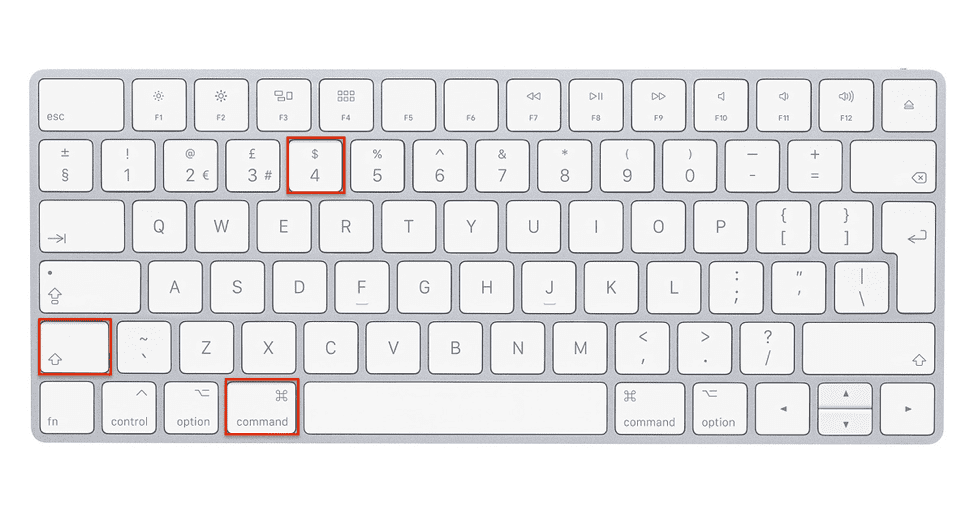
- Keyboard shortcuts that you can use after your Mac has started up.