Moonies Mac OS
1. Generate a variety of customisable reports such as tax year summary, transaction history, current balances, fees paid, gains and holds.
The Unification Church of the United States, sometimes colloquially referred to as the 'Moonies', is a religious movement in the United States of America.It began in the 1950s and 1960s when missionaries from Japan and South Korea were sent to the United States by the international Unification movement's founder and leader Sun Myung Moon.It expanded in the 1970s and then became involved in. Moonie's Burger House in Cedar Park. Grandma Moonie was all about hospitality, and when you visit you’ll see that it’s still at the forefront of the experience. Founded by the late Sun Myung Moon, the Unification Church is classified as a new religious movement - and the same group is also referred to as the Moonies, and labeled a cult. With a worldwide following of 1-2 million people, it is the largest active cult - that is, if it's a cult at all. The categorization is hard to establish, and pejorative (as is the nickname Moonies).
2. With the exception of retrieving current/historical currency prices (optional), Moonie can be used offline for all data entry, editing and report generation.
3. Moonie is an all-in-one portfolio monitoring, analysis, bookkeeping and reporting app designed specifically for cryptocurrency investors and traders.
4. Please note: Moonie is a standalone bookkeeping application and is not affiliated with any crypto/virtual/digital currency or blockchain platforms.
Merkmale und Beschreibung
Hauptmerkmale
Neueste Version: 1.9
Was macht Moonie tun? Moonie is an all-in-one portfolio monitoring, analysis, bookkeeping and reporting app designed specifically for cryptocurrency investors and traders. Providing an easy way to document and track all of your crypto trading and transaction activity.Keeping accurate records of your trading history takes time, effort and patience. Why struggle with all that complex number crunching when Moonie can do it for you?Simply enter all of your transaction activity and let Moonie do the rest. Calculate unrealised and realised capital gains for a chosen fiscal year. View a timeline of held assets maturing to long-term holds. Generate a variety of customisable reports such as tax year summary, transaction history, current balances, fees paid, gains and holds.Getting started• Manage your full transaction history in one place• Enter trades and transactions with ease• Incoming, outgoing, trades, transfers and fees• Import bulk transactions from generic or exchange csv/xlsx files• Add unlimited transactions for any coin or exchangeDashboard• Current portfolio value• Currency balances and distribution between accounts• Account values and balances breakdown• Unrealised and realised gains for a chosen fiscal year• Long-term / short-term gains split• Fiat invested and cryptocurrency converted back to fiat• Optionally view your portfolio in bitcoin (BTC) valuationsReports• Portfolio activity summary for a chosen fiscal year• End of fiscal year or custom date currency balances and values• Realised and unrealised capital gains for each currency• Calculate capital gains for each transaction• Comprehensive gains breakdown for each taxable event• Short to long-term hold projection for held assets• Drill down into transaction fees paid• Export all reports to pdf or csvCustomise• Support for major local currencies (fiat)• Fiscal year time period for reporting purposes• FIFO, LIFO, HPFO and LPFO cost layering methods for calculating gains• Time period for held assets to be deemed long-term holds• Optionally include bitcoin valuations along with your local currencyMoonie is developed by Ruff Robot as a costless community project. A unique and complex solution for portfolio monitoring, recording keeping and tax time preparation.All entered data is stored locally on your computer. With the exception of retrieving current/historical currency prices (optional), Moonie can be used offline for all data entry, editing and report generation.Let Moonie Crunch Those Numbers!Please note: Moonie is a standalone bookkeeping application and is not affiliated with any crypto/virtual/digital currency or blockchain platforms. Live/historical currency price data is provided by coinpaprika.com
Download für MacOS - Server 1 --> GratisDownload Neueste Version
Herunterladen und Installieren Moonie
Download für PC - Server 1 -->MAC:
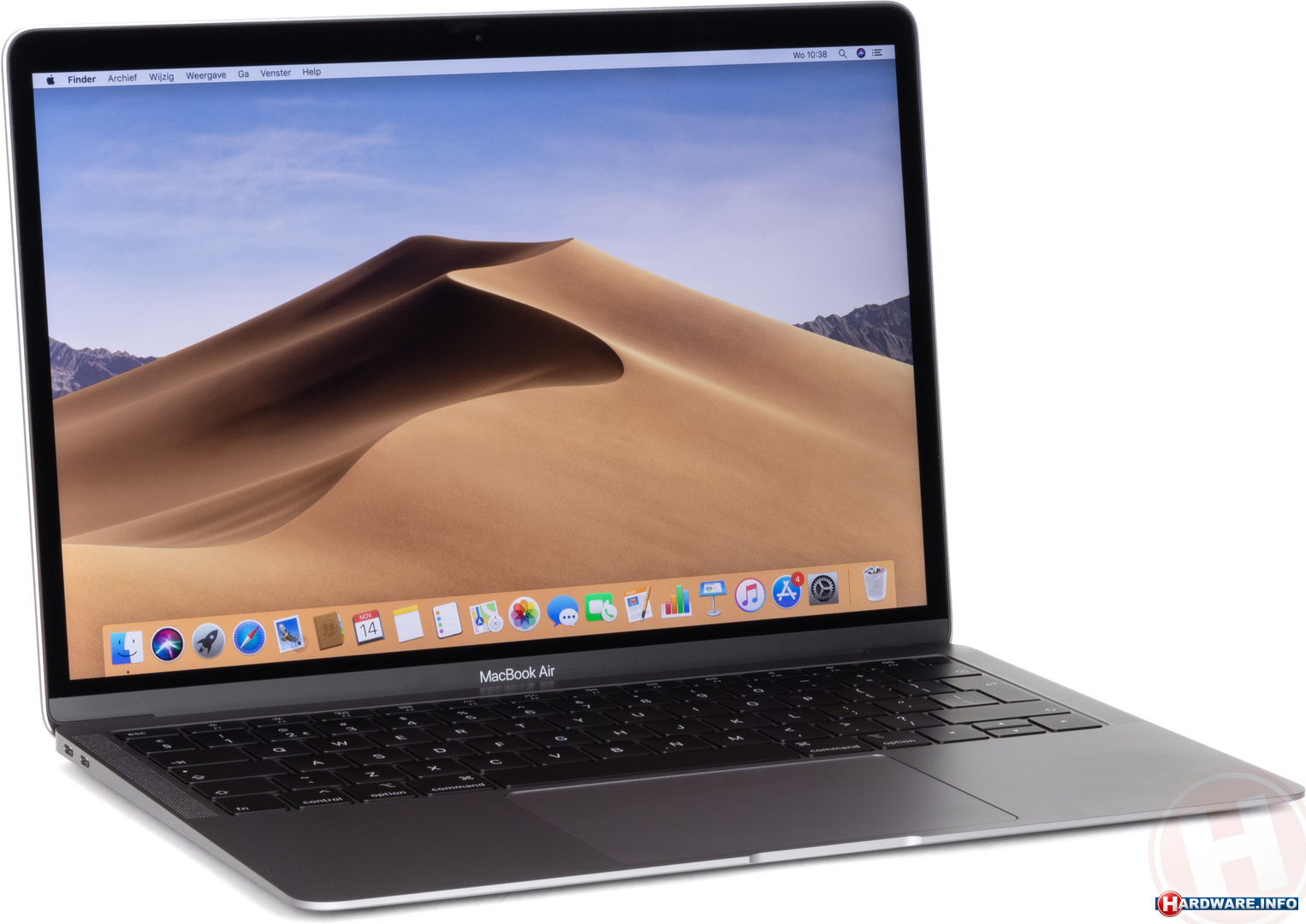
Download für MacOS - Server 1 --> Gratis
Vielen Dank für Ihren Besuch auf unserer Website. Ich wünsche dir einen schönen Tag!
Weitere Apps von Ruff Robot Pty Ltd
Moonies Mac Os X
As someone who is always on the prowl for new podcast material to enjoy, I recently came across one which is hosted by a name familiar to many in the States. Joe Rogan -- currently best known for being lead color commentator on most large UFC PPV events -- doubles as someone who hosts an interesting podcast under the simple guise of 'The Joe Rogan Experience.'
Specifically, episode 680 of his podcast showed up on my phone today, and it featured a lengthy discussion with a Steve Hassan on the intriguing topic of cults. Hassan is a mental health counselor who has personal experience with cult entrapment, as he was once a member of the Moonies. He dove into a variety of areas surrounding cults and their characteristics with Joe, and if interested, I recommend listening to his appearance on JRE 680. The real reason I plugged Joe's show is because during the episode with Hassan, the relevant topic of Apple naturally arose at one point. The question at large was thrown out in the wild. Is Apple and its following a cult?
For substance, Joe mentioned how he remembered old colleagues discussing upcoming Mac OS releases with near mysticism; as if every new iteration was about to bring about a newfound revolution in computing. It was part comedy, part reality, but the notion that hit home was quite apparent.
Apple has become almost holy not due to any altruistic motivations of its own doing -- its profit motive burns as brightly as any large tech company -- but because of an almost fanatical following it has assembled.
Apple product launches are a big deal -- and for hardcore believers, almost ritualistic. Apple Store workers, shown above, are cheering on the lucky first buyers at an iPad launch years back. Apple's near evangelical following was a core facet of the 2009 documentary, Macheads. (Image Source: CNN)
This new religion is passed down to followers (end users) through the Scribes (tech journalists) that preach the gospel of Apple. Its places of worship are easily found (Apple Stores) across the world, and its mass gatherings (launch events) reinvigorate the word of its gospel and propel belief in the brand.

As someone who owns a managed IT services company full time, and writes tech op/ed when time permits, I know full well the fervent positions that the Apple faithful hold as virtue. Apple Macs are better than PCs. Apple doesn't get malware. Apple this, Apple that.
And even when I take the time to outline point by point, with references, some of the holes in stated Apple Doctrine -- for example, ripping through their long held claim to security through obscurity -- I'm lambasted by the faithful in comments and me-too blog posts around the net.
While I'm far from fazed about the heat tossed my way, it comes without saying that the most dedicated of the Apple community are, in some respects, blind believers. And therein sits one of the core facets of followings that blur the line between mere thought collectives and cults: instilling a mindset that the cause can do no harm and never be wrong.
The Religion of Apple
Joe Rogan and I are certainly not the first ones to imply Apple as slightly holier than thou in the tech sphere today. In fact, numerous academics with far more science behind the matter have come to similar conclusions.
A sociologist from Eastern Washington University, Pui-Yan Lam, authored a scholarly paper which was published in the Sociology of Religion journal in 2001.
That essay, May the Force of the Operating System be with You: Macintosh Devotion as Implicit Religion, touched on religious themes related to higher meaning, believers who claim to be persecuted, and metaphorical battles between good and evil.
Lam spoke to one Apple believer, who was quoted in the research as saying, 'For me, the Mac was the closest thing to religion I could deal with'.
Lam goes on to say in the paper that 'The faith of Mac devotees is reflected and strengthened by their efforts in promoting their computer of choice'.
For the most devoted of Apple fanatics, the fruit logo goes beyond a fashion statement. It represents a lifestyle of technology usage that begins and ends with anything to come out of Cupertino.
And when it comes to recruiting new faithful, Apple makes proselytizing quite simple for followers. Apple's bold, simple logo is prominently plastered on all of its products, allowing its entire user base to purposely or passively perpetuate a simple notion: join us.
Why else did Apple need to have a glowing fruit logo on nearly every Mac laptop sold since 1999? While the trend seems to have supposedly finally bucked, walk into any Starbucks in metro areas like my home Chicago and you'll see the ever present glow of that iconic logo on a majority of computers.
Whether you know it or not, Apple is soft selling its brand through legions of, well, drones -- you know, those same drones they once ridiculed in their 1984 ad? Henry Ford famously claimed that a customer could have any color on their new Ford as long as it was black.
The same notion holds true for Apple buyers of today. They're more than welcome to any Apple computer, as long as it runs on Apple hardware and comes with Apple's proprietary connections and dongles. And of course, the shiny, glowing Apple logo.
When you're selling a lifestyle choice, as Apple clearly is today, conformity is key. The meaning of choice has been neutered down to the lowest common denominator which matters: you're going Apple, or you're not. It's as simple as that.
Just like most major religions, there's no negotiating on the core principles that the respective belief system is built upon. You can't build a following which allows followers to fragment ideals as they please. It just doesn't help foster the consolidated growth of the following.
Apple Stores share much in common with houses of worship. They have an idolatrous centrality around the iconic Apple logo. Products are elevated and isolated on booths akin to altars. Floors and facade are usually chock full of bold, smooth stone just like churches employ. Coincidence or just crafty observation? (Image Source: iPhone Savior)
Kirsten Bell, anthropologist from the University of British Columbia in Canada, follows a similar tune to that of fellow academic Pui-Yan Lam.
'They are selling something more than a product', Kirsten was quoted in a piece on CS Monitor. 'When you look at the way they advertise their product, it's really about a more connected life'. Most major religions share in the belief that they are promising a better life for followers, Kirsten noted.
She also went on to highlight how tightly knit Apple's logo and current day image is centered around the story and self of Apple's iconic founder, Steve Jobs. While Microsoft in some ways has Bill Gates to fill this same void, the devotion Apple fanatics have to Jobs -- placing him on a pedestal of his own -- shows that he enjoys a larger than life presence in how followers perceive Apple.
Steve Jobs is Apple. Apple, likewise, is Steve Jobs. There is no discernment between the two. For many devotees, buying that new Apple laptop or iPhone is very much akin to paying homage to their supreme leader of Appledom.
Apple portrayed PC users as mere drones in its '1984' commercial spot. 30 years later, and it's safe to say that the tables have turned. Apple has dominant control over legions of users who have next to zero choice of hardware and are virtually locked into Apple's own walled software garden. Who's Big Brother now? (Image Source: Cult of Mac)
Kirsten noted how Apple's product reveals are always in locations 'littered with sacred symbols, especially the iconic Apple sign itself.' For the keynotes, an Apple leader like Jobs or Cook 'addresses the audience to reawaken and renew their faith in the core message and tenets of the brand/religion'.
While anecdotal and qualitative evidence points in one direction, does actual scientific testing also come to the same conclusions? Well, it seems they do. A team of neuroscientists decided to put the theory to test as part of a BBC TV documentary, Secrets of the Superbrands, which first aired a few years back.
The test scenario was pretty simple. Take brain scans of a self-proclaimed Apple lover (Alex Brooks, of World of Apple fame) and compare them to those taken of religious followers from various faiths.
What they found gives us the hard evidence to support what Lam and Bell alluded to in their academic studies. 'The Apple products are triggering the same bits of [Brooks’] brain as religious imagery triggers in a person of faith'.
One of the scientists from the study went on, 'This suggests that the big tech brands have harnessed, or exploit, the brain areas that have evolved to process religion'.
Even the creators of the aforementioned TV documentary series, Alex Riley and Adam Boome, noted that what they saw at a new Apple store opening in London reminded them more so of 'an evangelical prayer meeting' than just 'a chance to buy a phone or a laptop'.
Every year, Apple's inner circle (journalists, developers) descends upon events like WWDC or product reveals. Since the average person is usually not invited, Apple's gospel is then spread through sermon, commonly delivered by devotees within the tech media at large. (Image Source: FastCompany)
This begs the obvious question: is near religious dedication to Apple, which is nothing more than a bona fide brand, healthy or ideal? Many out in the public sphere don't even skip a beat in admitting to their obsession with thy holiness Apple.
Richard Seymour, tech contributor at The Guardian, titled his part-observation, part Apple Watch gluttony editorial, My name is Richard and I am an addict -- an Apple addict.
His opening paragraph didn't skip a beat describing how Apple's (arguably) underwhelming Apple Watch made him feel:
Help me. This is not normal behaviour. I saw the Apple Watch and didn’t think, 'That is a preposterous piece of absurdly overpriced crap'. I saw the Apple Watch and thought, 'Come to me, you thing of beauty, for I must have Siri on my wrist'.
Rounding out his piece, Richard points out the obvious among his fellow faithful. 'Apple products are beautiful, smooth, ingenious, luxurious. As every Apple addict knows, they're 'just better'.
Will It Last?
Much of what I wrote above will simply get tossed out the window by a good majority of the blind faithful. This piece was never meant to act as a vehicle for changing beliefs or attitudes for or against Apple. My sole purpose was to answer the very question I put forth up front: is Apple and its following a cult?
Based on the evidence, including qualitative, anecdotal as well as scientific findings, I tend to believe that Apple has surpassed the point of having a loyal brand following.
Its followers -- the ones in line on all day one product launches, the ones who buy Apple product regardless of technical/functional/financial merit -- consistently show signs of being aligned with something greater than just a brand they love.
For many of these fanatics, their lifestyle is defined by Apple. It's a status symbol; a state of being; an inclusiveness as part of a special community that outsiders just can't understand.
Mac Os Catalina
They don't see their devotion as potentially unhealthy -- it's who they are, who they've become, and Apple is to be undeniably thanked for allowing them into the exclusive 'club'.
Am I saying that all Apple users are brainwashed zombies toting some socialist Apple line? Absolutely not. Many people use their products because they have a proven functional benefit they enjoy or just like their products over the competition. That's natural and absolutely justified.
But there's a good portion of Apple's user base -- definitely their most vocal ones -- who feel they're intrinsically tied to Apple's greater fight for survival. That's Apple as a belief, not just a brand, mind you. This 'inner circle' that fostered this cult like following of Apple are the ones I'm referring to.
How long the cult of Apple can live on can't be predicted. There will no doubt be those who preach the gospel of Apple long after they are considered the 'hip, trendy' tech brand -- the diehards, so to say. Whether it's Google, Microsoft, or some new entrant to take over this throne, it really doesn't matter.
There will be a point in time when even Apple outlives its own coolness.
Like all things in the world of tech, nothing lives forever. Even if your Messiah is his holiness, Steve Jobs.
Photo Credit: Shutterstock/Andrey Bayda
Derrick Wlodarz is an IT Specialist who owns Park Ridge, IL (USA) based technology consulting & service company FireLogic, with over eight+ years of IT experience in the private and public sectors. He holds numerous technical credentials from Microsoft, Google, and CompTIA and specializes in consulting customers on growing hot technologies such as Office 365, Google Apps, cloud-hosted VoIP, among others. Derrick is an active member of CompTIA's Subject Matter Expert Technical Advisory Council that shapes the future of CompTIA exams across the world. You can reach him at derrick at wlodarz dot net.