Cube Hit Mac OS
With the advent of the Wwise Launcher, installing the Cube Demo sample will list it under the Samples tab where you can directly click Run Cube to launch the demo. For Mac®, however, there are a couple of extra steps to follow beforehand. Running the Cube Demo on Mac® The Cube Demo for Mac requires libSDL2 to be installed. Hit the next button; You should now see the Team Project Dialog Select your project and then hit the Next and then the Finish button; If everything went correctly you should now see your Team Explorer pane populated; And thats it! Now you can get started writing your kick-ass iOS applications. Note: The headings on this list indicate the Macintosh System bundle names; the bullet points indicate the version of the System File included in that bundle. This is to make it clearer for people searching for specific bundle versions as opposed to System File versions. Finder File versions are not indicated. 1 Classic Mac OS 1.1 Macintosh System Software (0 - 0.3) 1.1.1 System File 1 1.1.2. The Power Mac G4 Cube is capable of running Windows through emulation using a program like Microsoft Virtual PC 7, but it cannot boot Windows or run Windows via virtualization like the Intel-based Macs. If you need a system capable of running Windows, you would be best served with an Intel-based Mac or a Windows PC. The Macintosh (mainly Mac since 1998) is a family of personal computers designed, manufactured, and sold by Apple Inc. Since January 1984. The original Macintosh is the first successful mass-market personal computer to have featured a graphical user interface, built-in screen, and mouse. Apple sold the Macintosh alongside its popular Apple II, Apple III, and Apple Lisa families of computers.
Many of us are initially surprised to learn that our devices do not support the kind of secure compartmentalization that our lives demand, and we're disappointed that software vendors rely on generic defenses that repeatedly succumb to new attacks.
In building Qubes, our working assumption is that all software contains bugs. Not only that, but in their stampeding rush to meet deadlines, the world's stressed-out software developers are pumping out new code at a staggering rate — far faster than the comparatively smaller population of security experts could ever hope to analyze it for vulnerabilities, much less fix everything. Rather than pretend that we can prevent these inevitable vulnerabilities from being exploited, we've designed Qubes under the assumption that they will be exploited. It's only a matter of time until the next zero-day attack.
In light of this sobering reality, Qubes takes an eminently practical approach: confine, control, and contain the damage. It allows you to keep valuable data separate from risky activities, preventing cross-contamination. This means you you can do everything on the same physical computer without having to worry about a single successful cyberattack taking down your entire digital life in one fell swoop. In fact, Qubes has distinct advantages over physical air gaps.
Vintage Mac Museum Workhorse – PowerMac G4 Cube
The PowerMac G4 is one of Apple’s most successful and longest-running series of machines. Spanning the transition from Mac OS 9 to Mac OS X and providing good value for the money, G4-based systems are still in use more than 10 years after the architecture debuted. Yet not all models were smash hits on arrival. Rounding out the set of VMM Workhorses is one of the most iconic designs, and flops, in Macintosh history.
VMM Workhorse – PowerMac G4 Cube, Mac OS X 10.4.11
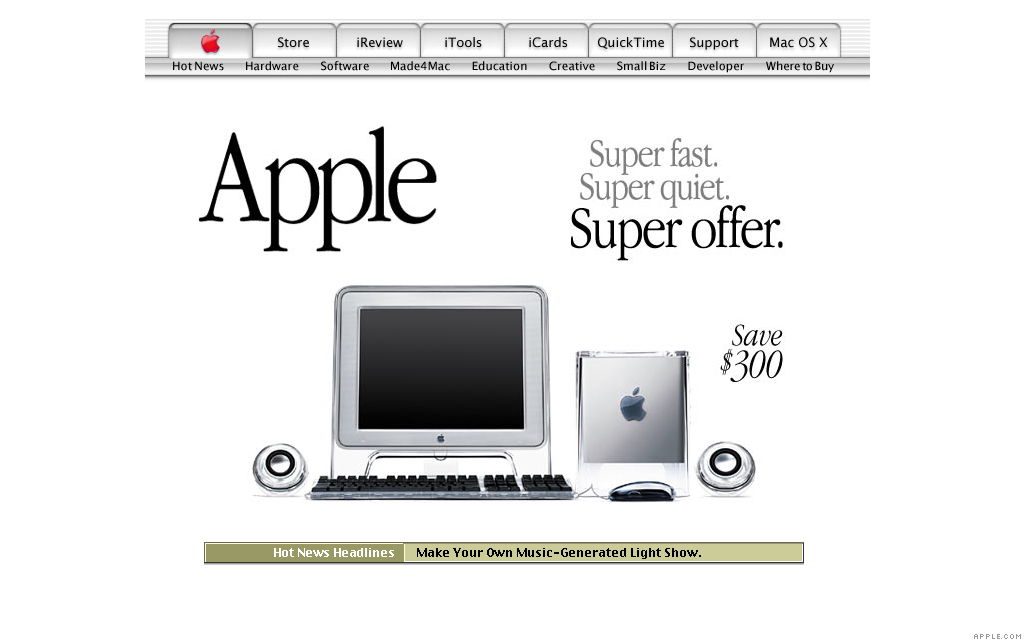
Steve Jobs loves cube shaped computers. He first designed one for NeXT, a big black box which was an aesthetic marvel but a commercial failure. His second attempt for Apple fared similarly, but has obtained collector status due to the beauty and novelty of the design.
The Cube is 8″ tall and passively cooled (like the G3 DV iMacs) for silent operation – fans are a longstanding peeve of Steve. However, limited expansion capability and a premium price led to slow sales as users felt bang for the buck was lacking. The Cube was discounted several times, then finally discontinued after a short run. Apple got the small headless Mac tradeoff right a few years later with the Mac mini, itself a third the size of the Cube with more power at a lower cost.
The VMM Cube runs Mac OS X 10.4.11 and serves as the central file server for Oakbog and the Mac Museum. Tiger is a good OS to use for a mixed-generation fileserver of this kind, its version of AppleShare can communicate with versions of the Mac OS from System 7.5.3 through to the latest Mac OS X Snow Leopard! You need to enable File Sharing on the Tiger-based system, then assign it a static IP address on your network. Newer Macs see the share via Bonjour, and older Macs can access things using AppleShare IP by entering the server’s address in the Chooser. Both read and write access is supported.
Cube Hit Mac Os Update
The Cube contains my repository of pre-OS X Classic Mac software, over 7GB worth of vintage word processors, graphics programs, database software and utilities. Some of this is installed on the other workhorse machines – the Mac Plus, Quadra 840av and PowerBook Wallstreet – with the remainder accessible when needed. The Cube also contains a shared folder within which I copy the elements for file transfer and conversion work – original files, intermediate stages, and final versions.
With this set of machines I can read and copy files from nearly any Mac generation and common storage format – floppy disk, hard drive, Zip and Jaz, MO cartridges, etc.. Really old files from the Mac Plus get relayed to the Quadra via LocalTalk, then from there to the Cube via Ethernet. The Wallstreet handles most of the file conversions, and once work is completed files can be copied to my Mac Pro to burn to CD or left on the Cube for direct access via FTP.
Cube Hit Mac Os Catalina
This last capability of the Lucite Wonder is handled by Rumpus FTP server software, which provides both FTP and HTTP (web based) access to files for upload and download. I have a static IP address on the internet and a domain name registered for the server. This lets me get from the Mac Plus to the Internet in only two hops – not bad at all!
Who says there’s no life left in older machines?

Hi Adam,
Great to hear your cube is still a workhorse!
I’ve had mine in a box too long, about to get it out and consider what future it might have as a home server. The core2duo MacBook Pro video card is dying, prompted me to get the iMac g5 iSight back out for regular use, and one thing leads to another. The cube is stock 450 with a third party GeForce 2mx swapped in, and I added a fan back in the day that it was still seeing regular action. I’ve been thru one drive already
Back to my point: how durable have you found yours, any hard drive/heat issues etc?
Adam, we are downsizing and don’t have room for many ‘toys’ in the new place. I have a mint condition 2002 Mac G4 Cube (I still use sometimes) that I’d like to sell rather than cart off to the dump. It has been upgraded as far as possible with ram and operating system. Any tips on finding a buyer would be appreciated. It’s all there save for the original box. Thanks. Dwane Powell, Raleigh, NC