Capacity Mac OS
Operating System macOS 10.13 High Sierra Apple MacBook Air MJVM2LL/A 11.6 Inch Laptop (Intel Core i5 Dual-Core 1.6GHz up to 2.7GHz, 4GB RAM, 128GB SSD, Wi-Fi, Bluetooth 4.0, Integrated Intel HD Graphics 6000, Mac OS) (Renewed). Operating System macOS 10.13 High Sierra Apple MacBook Air MJVM2LL/A 11.6 Inch Laptop (Intel Core i5 Dual-Core 1.6GHz up to 2.7GHz, 4GB RAM, 128GB SSD, Wi-Fi, Bluetooth 4.0, Integrated Intel HD Graphics 6000, Mac OS) (Renewed). MacOS Big Sur elevates the most advanced desktop operating system in the world to a new level of power and beauty. Experience Mac to the fullest with a refined new design. Enjoy the biggest Safari update ever. Discover new features for Maps and Messages.
October 15, 2017
Being somewhat familiar with the fact that there are a number of counterfeitSD-cards on Amazon that claim a capacity, but exhibit write errors or'looping back around' behavior when you try to actually use the full claimedcapacity of the card, I wanted to verify that new SD cards I buy actuallyare their claimed size. More than that, I want proof that if I put a uniqueset of data on there that uses up the full capacity, that the sameunique set of data can be retrieved later – proof that the card isboth legitimate, and not exhibiting bad sectors / manufacturer defects.
I use Mac OS X, and the easiest way to do this was with the tool f3.You can find the official site here
You'll need to be familiar with using Terminal, too.
To start, you'll want to install the HomeBrew or MacPorts package managers.This is fairly straightforward, so google's your friend here.
Next,
brew install f3
or,
port install f3
Depending on which package manager you like. I chose HomeBrew.
As of writing, the HomeBrew package is at version 7.0 and has the toolsf3write and f3read. Curiously the f3probe tool is missing, but youdon't necessarily need it to just verify an SD card.
To start verifying your card, plug it in, and run the following:
df -h
Which yields something like this:
$ df -hFilesystem Size Used Avail Capacity iused ifree %iused Mounted on/dev/disk1 811Gi 778Gi 33Gi 96% 5089882 4289877397 0% /devfs 345Ki 345Ki 0Bi 100% 1194 0 100% /devmap -hosts 0Bi 0Bi 0Bi 100% 0 0 100% /netmap auto_home 0Bi 0Bi 0Bi 100% 0 0 100% /home/dev/disk2s2 1.0Ti 980Gi 43Gi 96% 7458248 4287509031 0% /Volumes/Time Machine Backups/dev/disk3s1 119Gi 7.8Mi 119Gi 1% 62 975218 0% /Volumes/Untitled
Now, it's up to you to carefully pick the disk that you just plugged in.If you aren't sure, unplug it, and run df -h to see what's still there,plug back in, and run df -h to see what appears. Be 100% sure that thecapacity of the drive looks right – we wouldn't want to trash one ofyour real drives here!
In this case, I see that /dev/disk3s1 (the system-level specifier for this drive)is about the same size as my claimed 128gb drive – 119Gi under Avail.That's mounted at /Volumes/Untitled (i.e. the place I go in the filesystemto interact with the volume).
Now, I can actually verify the drive with f3 by first writing data to it:
$ f3write /Volumes/UntitledF3 write 7.0Copyright (C) 2010 Digirati Internet LTDA.This is free software; see the source for copying conditions.Free space: 119.05 GBCreating file 1.h2w ... OK!Creating file 2.h2w ... OK!Creating file 3.h2w ... OK![snip...]Creating file 116.h2w ... OK!Creating file 117.h2w ... OK!Creating file 118.h2w ... OK!Creating file 119.h2w ... OK!Creating file 120.h2w ... OK!Free space: 128.00 KBAverage writing speed: 70.86 MB/s
And now, let's confirm that the data was written correctly by reading itback:
$ f3read /Volumes/UntitledF3 read 7.0Copyright (C) 2010 Digirati Internet LTDA.This is free software; see the source for copying conditions. SECTORS ok/corrupted/changed/overwrittenValidating file 1.h2w ... 2097152/ 0/ 0/ 0Validating file 2.h2w ... 2097152/ 0/ 0/ 0Validating file 3.h2w ... 2097152/ 0/ 0/ 0[snip...]Validating file 118.h2w ... 2097152/ 0/ 0/ 0Validating file 119.h2w ... 2097152/ 0/ 0/ 0Validating file 120.h2w ... 94208/ 0/ 0/ 0 Data OK: 119.04 GB (249655296 sectors)Data LOST: 0.00 Byte (0 sectors) Corrupted: 0.00 Byte (0 sectors) Slightly changed: 0.00 Byte (0 sectors) Overwritten: 0.00 Byte (0 sectors)Average reading speed: 68.01 MB/s
And, that's good – can safely store media on this for the next big adventure!
By Daniel Starling
Software consultant in Portland, OR
In today’s era of multi-terabyte hard drives and online storage, many of us don’t keep as close an eye on our disk usage as we used to. Still, even the largest drives fill up eventually. If you don’t know how to check your disk space use on your Mac, here’s where to look.
Options 1 and 2: From the Finder
The Finder gives you a couple ways to see how much free disk space you have. These are the easiest ways.
Preview your storage device. In macOS, if you select and item in the Finder and press the spacebar on your keyboard, you get a preview of the item. For example, if you select a text document and then press the spacebar, you can see what’s in the document without actually opening it.
You can use preview to check your storage device’s capacity. Here’s how.
1. Select the storage device on the Desktop. (To make your storage device appear on your Desktop, go to the Finder and select Finder > Preferences, click on General, and modify the setting for Show these items on the Desktop.) Or open a Finder window, look in the left column, under the Devices heading, and select the storage device.
2. Press the spacebar. You should see a window open that shows the capacity of your storage device and the available space.
3. To close the window, press spacebar again, or press Command-W, or click on the close-window icon (the circle X) in the upper left.
Finder window status bar. If you would like to have an overview of your free disk space at all times from the Finder, you can turn on the Finder’s status bar.
1. Open a Finder window if you don’t have one open already (click the Finder’s Dock icon or go to File > New Finder Window).
2. Open the View menu and select Show status bar. This will show you how many items are in the current folder, and if you’re viewing a folder on your hard drive (such as your Applications or Documents folder), you’ll also get a readout of your hard drive’s free space.
Options 3: Get Info
1. Find your hard drive in the Finder and select it. If it appears in the Finder window sidebar or on the Desktop (it doesn’t by default—go to Finder > Preferences to change that), click your hard drive’s icon in either of those spots. If your hard drive icon doesn’t appear there, go to Go > Computer, then click the hard drive icon under Devices.
2. Click the File menu, and select Get Info, or press Comand-I on your keyboard.
The Info window shows the capacity, available space, and used space, as well as other information.
Option 4: About This Mac
In recent versions of macOS (Yosemite or later), you can easily check your disk usage from the About box.
1. Open the Apple menu, then select About This Mac.
Capacity Mac Os 11
2. Click the Storage tab in the toolbar to see how much disk space you have available. (On OS X Mountain Lion or Mavericks, click the More info button, then click Storage.)
You also get a simplified overview of what sort of files are eating up your storage space.
Capacity Max System
Option 5: From Disk Utility
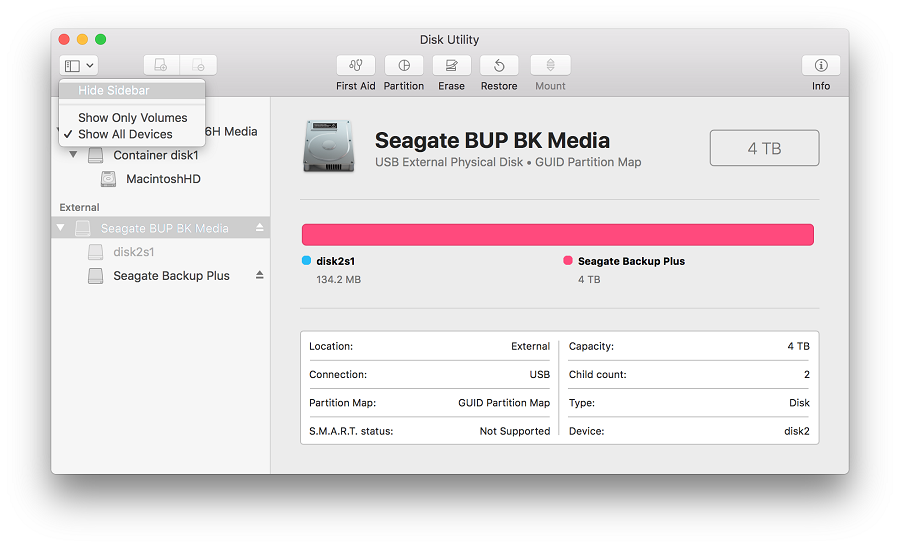
You can also view your free disk space from your Mac’s Disk Utility app. Open Spotlight by clicking the magnifying glass in the upper-right corner of the screen, then type Disk Utility in the search box that appears. Once Disk Utility comes up in the list and is highlighted, press the Enter key. Disk Utility is also found in Applications > Utilities.

Once Disk Utility opens, select your hard drive’s name from the list. You can see your drive’s capacity, its available space, its used space, and other info. You can also check the free space for any drive you have connected to your Mac from this window, be it a USB flash drive or external hard drive.